What Does a Career Coach Do? Roles, Benefits, and How They Can Help Your Job Search
What Does a Career Coach Do? Roles, Benefits, and Job Search Support
A career coach helps you make informed career decisions and turn them into practical action. Whether you are applying for your first job, changing industries, pursuing a promotion, or preparing for an executive role, coaching can provide structure, feedback, and accountability.
However, services vary widely. Understanding what career coaching includes, and how it differs from career counseling, can help you choose the right support.
What Does a Career Coach Do?
A career coach works with you to clarify your goals, identify obstacles, and develop a plan for moving forward. Rather than choosing a career for you, a good coach helps you evaluate options and make your own decisions.
Typical responsibilities include:
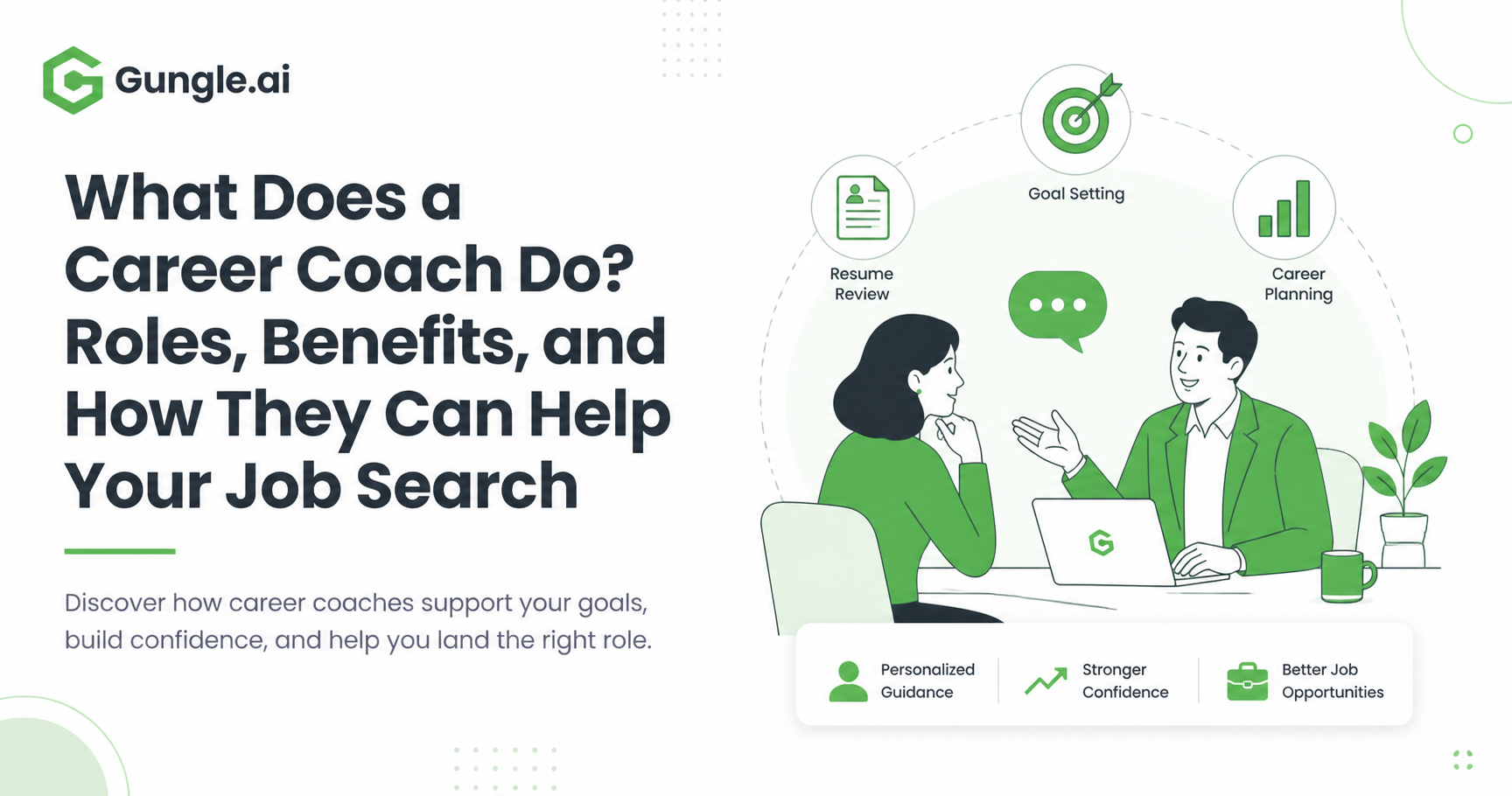
- Career planning: Identifying suitable roles, industries, and long-term goals based on your interests, experience, and priorities.
- Job search strategy: Finding target employers, choosing job-search channels, improving networking, and organizing applications.
- Resume and profile feedback: Presenting relevant accomplishments clearly on your resume, cover letter, portfolio, and professional profiles.
- Interview preparation: Practicing answers, developing strong examples, and improving communication through mock interviews.
- Professional development: Identifying skill gaps and creating a realistic learning or advancement plan.
- Accountability: Setting deadlines, reviewing progress, and adjusting your strategy when needed.
For example, a career changer may need help translating project-management experience into language used by technology employers. A recent graduate may need a clearer target role and practice explaining limited work experience. A senior leader may work with an executive career coach on leadership positioning and executive interviews.
Types of Career Coaching
The right specialist depends on the result you want.
Job Search Coach
A job search coach focuses on the process of finding employment. This can include selecting target roles, building a networking plan, tailoring applications, and preparing for interviews. This option is useful if you know what job you want but are struggling to secure interviews or offers.
Professional Development Coach
A professional development coach helps you grow within your current role or prepare for greater responsibility. Topics may include communication, leadership, workplace relationships, skill development, and promotion planning.
Executive Career Coach
An executive career coach works with senior professionals pursuing leadership roles or managing complex transitions. Coaching may cover executive presence, leadership narratives, stakeholder communication, confidential searches, and high-level interview preparation.
Career Coaching vs. Career Counseling
These terms sometimes overlap, but their emphasis can differ.
- Career coaching is usually action-oriented and focused on goals, decisions, performance, and job-search execution.
- Career counseling may explore career interests, values, educational choices, and personal barriers in greater depth. Depending on the service and location, it may be delivered by a counselor with specific education or professional licensure.
- Recruiting serves an employer by sourcing candidates for open positions. A recruiter is not necessarily responsible for managing your broader career.
- Mentoring usually involves guidance from someone with relevant experience, often within the same profession or industry.
A coach is not a substitute for a licensed mental health professional. If anxiety, depression, trauma, or another health concern is significantly affecting your work or decision-making, consider seeking appropriately qualified clinical support.
Benefits and Limitations of Working With a Career Coach
Career coaching can help you:
- Define a specific goal instead of applying randomly
- Recognize transferable skills and relevant accomplishments
- Improve your resume and interview stories
- Create a consistent job-search routine
- Evaluate offers using your priorities
- Build confidence through preparation and practice
Coaching does not guarantee a job, promotion, salary increase, or interview. A coach also cannot control hiring budgets, employer decisions, or labor-market conditions. The strongest results usually require honest reflection and consistent follow-through from you.
How to Choose the Right Career Coach
“Career coach” is not a universally regulated title, and requirements vary by location. Evaluate each provider carefully rather than relying on the title alone.
- Define your objective. Decide whether you need career direction, resume support, interview practice, leadership development, or a complete job-search plan.
- Check relevant experience. Ask whether the coach understands your career level, industry, or type of transition.
- Review the process. Learn what sessions cover, how progress is measured, and whether feedback between sessions is included.
- Ask about qualifications. Relevant training, professional credentials, and work experience can be useful signals, but none alone guarantees quality.
- Clarify fees and policies. Request written information about costs, package length, cancellations, confidentiality, and expected outcomes.
- Avoid unrealistic promises. Be cautious of anyone guaranteeing employment, interviews, or a specific salary.
Before committing, ask: “What would we work on during the first three sessions?” A specific answer can reveal whether the coach’s approach matches your needs.
How to Prepare for Your First Session
Bring your current resume, several job descriptions that interest you, and a short explanation of what feels difficult. List your key constraints, such as location, schedule, compensation needs, or training time. You will get more value from coaching when your coach has concrete information to review.
Frequently Asked Questions
Can a career coach write my resume?
Some coaches provide resume writing, while others offer strategy and feedback only. Confirm the deliverables before purchasing a service. You should still understand and verify everything on your resume.
Is career coaching worth it?
It may be worthwhile if you need expert feedback, structure, or accountability and can afford the service. Free alternatives include alumni career centers, public employment services, professional associations, mentors, and trusted peers.
When should I hire a career coach?
Consider coaching when you feel stuck, receive few interview invitations, repeatedly struggle in interviews, face a major transition, or need a structured advancement plan.
Take the Next Step in Your Career
A career coach can clarify your direction and help you approach career planning, applications, and interviews more strategically. Choose someone whose expertise matches your goal, ask clear questions, and remember that coaching works best when paired with consistent action.
Ready to find your next opportunity? Explore relevant job openings on Gungle.ai and see where your skills could take you.